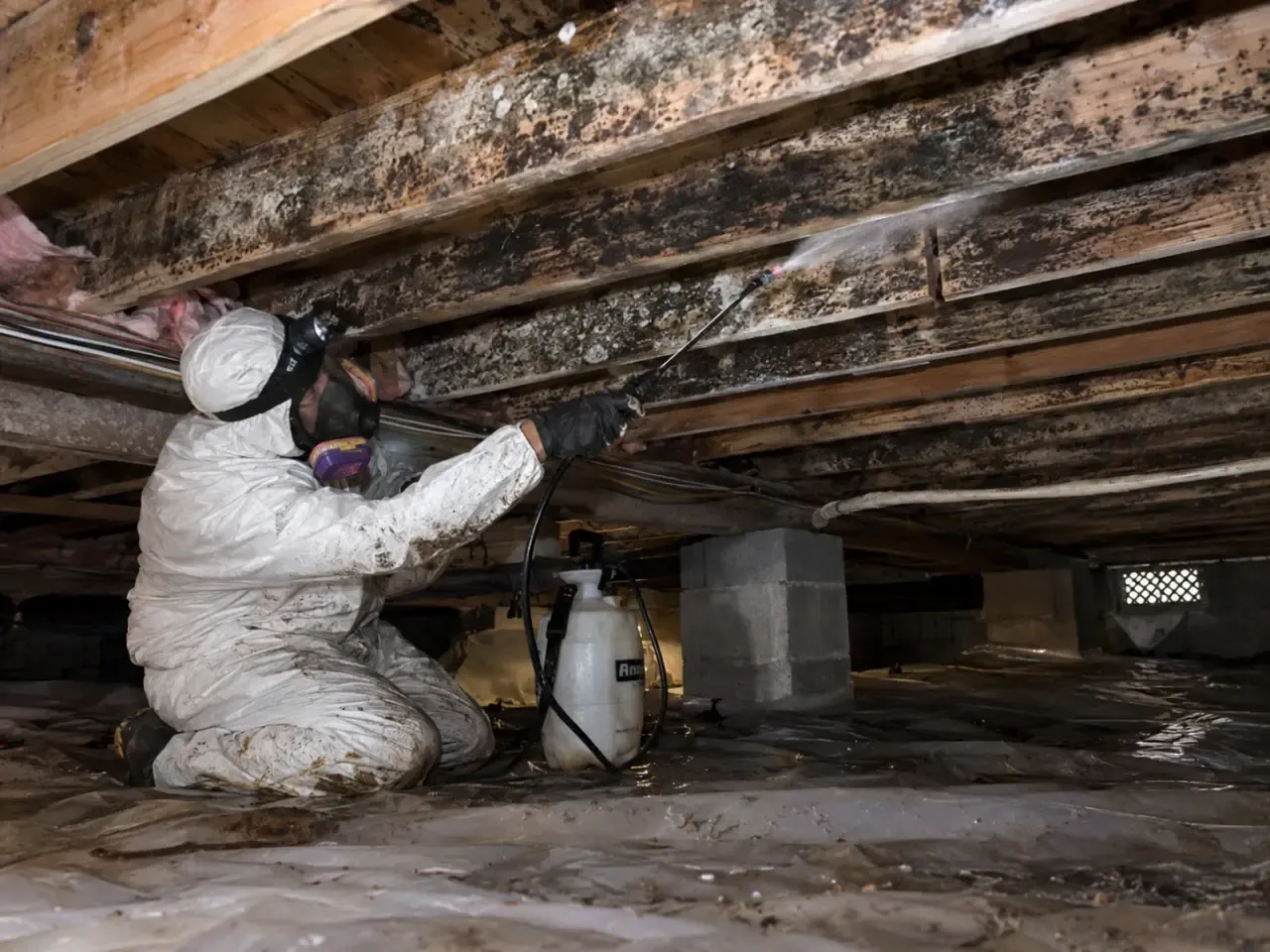
You identify mold behind bathroom walls in Frisco homes by watching for four things: a musty smell that never leaves, paint or caulk that bubbles and peels, drywall that feels soft or spongy when you press it, and dark staining along the baseboard or tile grout line. Any one of those is enough to suspect hidden growth. Two or more together almost always means moisture has been feeding mold inside the wall cavity for weeks.
This guide walks through the exact signs we look for, how to check without tearing your bathroom apart, and when a Frisco bathroom has moved past a DIY wipe-down into a real remediation job.
Why Bathroom Walls in Frisco Hide Mold So Well
Bathroom walls in Frisco hide mold because the wall cavity is a dark, humid, low-airflow space that sits directly behind the wettest room in the house. A typical Frisco shower runs 10 to 15 minutes at 105°F, and that steam pushes moisture into every gap around the tile, the valve trim, and the drywall seams.
Most Frisco homes built after 2005 use paper-faced drywall in bathrooms. That paper is food for mold. Once the paper face gets damp and stays damp for 24 to 48 hours, mold spores that are already in the air can colonize it. You will not see any of this from the bathroom side because the tile, grout, and paint act as a lid.
If you have ever dealt with a slow supply-line leak or a backed-up drain, you already know how fast water finds a low point. The same principle applies behind your shower wall. Many homeowners we work with on Residential Mold Remediation Frisco TX tell us the smell started months before they saw anything.
What Are the Signs of Mold Behind Bathroom Walls?
The signs of mold behind bathroom walls are smell, texture, and staining - in that order of reliability. Smell shows up first because mold releases microbial volatile compounds as soon as it starts digesting drywall paper. Texture and staining follow once the colony has grown enough to push through the surface.
Smell: The Most Reliable Early Warning
A musty smell behind a bathroom wall in Frisco TX usually reads as damp cardboard, old basement, or wet dog. It gets stronger when the bathroom has been closed up and weaker after you run the exhaust fan for an hour. If the smell returns every time the humidity climbs, that is a strong signal of active growth inside the cavity.
Texture: Soft Drywall, Bubbled Paint, Loose Tile
Press the wall gently with two fingers along the baseboard and around the shower valve. Healthy drywall feels firm and cool. Mold-damaged drywall feels soft, spongy, or crumbly. Paint that bubbles or peels in a straight line usually traces a moisture path behind it. Loose or hollow-sounding tile is another sign - the thinset has lost its bond because the substrate behind it is wet.
Staining: Baseboards, Grout Lines, and Ceiling Corners
Look for dark gray, green, or black speckling along the bottom of the baseboard, in the grout lines on the shower floor, and in the corners where the wall meets the ceiling. On a Frisco bathroom with a slab foundation, water wicks up from the bottom, so the baseboard is often the first place staining shows.
How to Check for Mold Behind Bathroom Walls in Frisco
You can check for mold behind bathroom walls in Frisco without opening the wall by using your nose, your hands, a flashlight, and a cheap moisture meter. A pin-type moisture meter costs $30 to $60 at any hardware store and reads the percentage of water in drywall. Anything above 16% is a problem; above 20% is active growth territory.
- Close the bathroom for 30 minutes. Turn off the exhaust fan and shut the door. Then step in and smell. If the musty odor hits you immediately, note which wall it is strongest near.
- Press along the baseboard and shower valve. Work from the corner outward. Mark any spot that feels softer than the drywall six inches away.
- Shine a flashlight along the wall at a low angle. Raking light reveals bubbles, hairline cracks, and shadowed staining that flat lighting hides.
- Take moisture readings. Push the meter pins into the drywall at three heights: 6 inches, 24 inches, and 48 inches off the floor. Write down the numbers. A dry wall reads 8% to 12%. A wet wall reads 18% to 30%.
- Check the room below or beside the bathroom. Water travels. Look at the ceiling of the room under the bathroom and the shared wall in the adjacent bedroom or closet.
If two or more of those checks come back positive, you are looking at a real moisture problem, not surface mildew. Surface mildew on grout is a cleaning job. Mold behind the wall is a remediation job.
The Frisco Moisture Problem: Humidity, Clay Soil, and Shower Leaks
Frisco sits on expansive clay soil, and that clay moves with every wet-dry cycle. From October through May, the ground swells and shrinks around your foundation, and that movement stresses the supply lines and drain connections running under the slab. A pinhole leak on a copper line can drip into a wall cavity for months before you notice a water bill bump.
Summer is the other half of the problem. Frisco humidity routinely sits between 60% and 75% from June through September, and your air conditioner is doing double duty pulling that moisture out of the air. If your bathroom exhaust fan is undersized or vented into the attic instead of outside, that humidity has nowhere to go but into the walls.
We see this pattern constantly in older sections of Mold Remediation in Panther Creek, where mature trees shade the roof and slow down the drying that would normally happen after a shower. The shade is great for the yard. It is hard on the bathroom wall.
When a shower pan or valve body leaks, the water does not pool on the floor. It runs down the stud bay, soaks the bottom plate, and starts growing mold on the back side of the drywall. That is why hidden bathroom wall mold in Frisco TX is so often found 12 to 18 inches above the floor, not at eye level.
When to Call a Mold Inspector for a Frisco Bathroom
Call a mold inspector for a Frisco bathroom when you have a musty smell plus a moisture reading above 16%, when the affected area is larger than about 10 square feet, or when anyone in the house has asthma or allergies that get worse in that bathroom. Those three triggers cover most of the cases where DIY cleaning will not solve the problem.
Here is the practical line. If the mold is visible, dry, and smaller than a dinner plate, you can clean it with detergent and water and fix the moisture source. If the mold is behind the wall, if the drywall is soft, or if the smell keeps coming back after cleaning, you need a professional assessment. Disturbing a hidden colony without containment spreads spores into the rest of the house.
Our team starts every job with a proper Mold Inspection Frisco TX - moisture mapping, thermal imaging, and air sampling where it makes sense. We find the source, tell you what it will take to fix it, and give you a flat price before we open anything up.
Common Mistakes Homeowners Make With Hidden Bathroom Wall Mold
The biggest mistake is painting over the stain. Paint traps moisture against the drywall paper and gives the mold a sealed, humid environment. The second biggest mistake is tearing out the wall before setting up containment.
- Bleaching the surface. Household bleach kills mold on non-porous tile, but it does not penetrate drywall paper. The colony keeps growing behind the bleach stain.
- Running a box fan into the wall. Air movement without filtration blows spores into the rest of the bathroom and the adjacent room.
- Fixing the mold but not the leak. If the shower valve or supply line still drips, new growth shows up within 30 to 60 days.
- Ignoring the HVAC. Mold spores pulled into the return air get distributed through the whole house. That is why we pair remediation with HEPA Air Filtration Frisco TX on most bathroom jobs.
- Waiting for the smell to go away. It will not. Mold goes dormant when it dries out, then reactivates the next time the humidity climbs.
Frequently Asked Questions
What are the signs of mold behind bathroom walls?
A persistent musty odor, soft or spongy drywall, bubbling paint, loose tile, and dark staining along the baseboard or grout lines. A moisture meter reading above 16% on the drywall confirms active moisture. Two or more of these together point to hidden growth.
How can I check for hidden mold in my Frisco bathroom?
Close the bathroom for 30 minutes and smell it. Press along the baseboard and shower valve for soft spots. Take moisture readings at 6, 24, and 48 inches off the floor. Anything above 16% means moisture is feeding mold inside the wall.
Can a leaking shower cause mold inside a wall?
Yes, and it is the most common cause we see. A shower valve or pan leak drips 1 to 5 gallons a day into the stud bay. Drywall paper stays wet for 24 to 48 hours and mold colonizes. Most hidden growth sits 12 to 18 inches above the floor.
Should I test for mold before opening a bathroom wall?
Yes. Air and surface sampling before demolition tells you what species you are dealing with and how far spores have spread. It also gives you a baseline to verify the space is clean after remediation. Testing costs $250 to $600 in the Frisco area in 2026.
Who can inspect bathroom wall mold in Frisco TX?
A licensed mold assessment professional with moisture-mapping and thermal imaging equipment. Frisco Mold Shield handles inspections, testing, and full remediation for Frisco homeowners. Call (469) 746-9038 to schedule an assessment.
Get Help With Mold Remediation in Frisco
If your bathroom smells musty, the drywall feels soft, or the paint keeps bubbling no matter how many times you fix it, the moisture is still there and the mold is still growing. We handle Mold Remediation Frisco TX from inspection through final clearance, and we work directly with your insurance when a leak is covered.
Call Frisco Mold Shield at (469) 746-9038 for a same-week bathroom mold assessment anywhere in Frisco.